
Right to Clean Water Under Article 21: How Indian Courts Hold State Governments Accountable
Written by ADITI KULKARNI
At a glance
- AAuthorADITI KULKARNI
- Read Time5 min read
Right to Clean Water Under Article 21: How Indian Courts Hold State Governments Accountable
Environmental accountability of State governments and the constitutional right to clean water
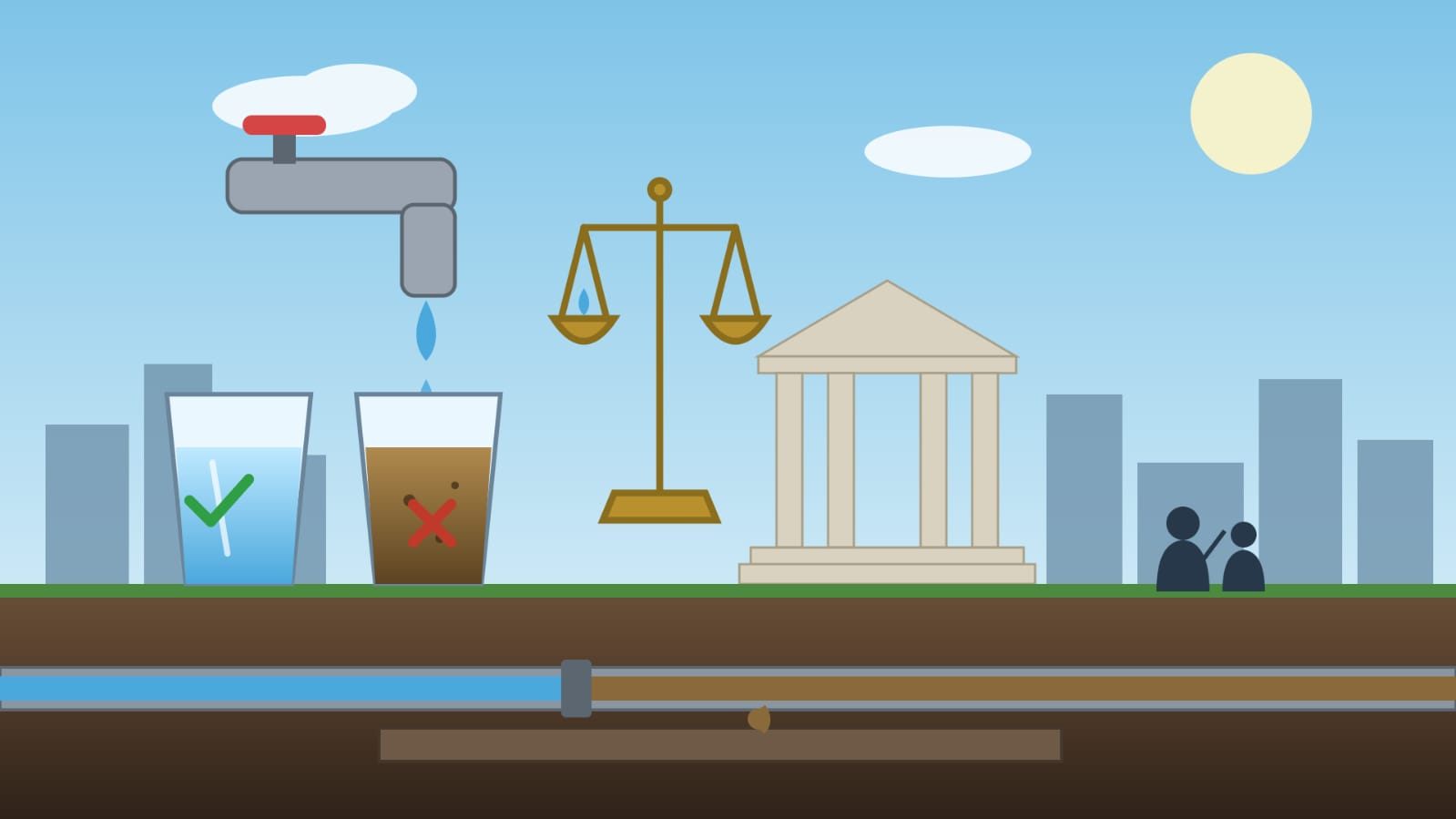
Turn on a tap. Most of us do it forty times a day without a thought. Now imagine that, in December 2025, the water in Bhagirathpura, a locality in Indore, India’s celebrated “cleanest city,” made people ill and, in some reports, led to deaths. The Indore Bench of the Madhya Pradesh High Court called it a public health emergency and said that the right to life under Article 21 includes the right to clean drinking water. That raises a pointed question: if the right to clean water is a fundamental right, who answers when it fails? This article explains the right to clean water under Article 21, the legal tools Indian courts use, and how State governments are held accountable.
Is Clean Water a Fundamental Right in India?
What Article 21 Says
Article 21 does not mention water. It says only that no person shall be deprived of life or personal liberty except according to procedure established by law. The Supreme Court filled the gap. In Subhash Kumar v. State of Bihar, it held that the right to life includes the right to enjoy pollution-free water and air for full enjoyment of life.
Directive Principles and Fundamental Duties
The Constitution adds support elsewhere. Article 47 makes improving public health a primary duty of the State, Article 48A directs the State to protect the environment, and Article 51A(g) asks every citizen to do the same. The courts did not receive a glass of water from the Constitution; they read one into the promise of a life with dignity.
Legal Principles Courts Use to Enforce Environmental Accountability
Precautionary principle and polluter pays. In Vellore Citizens’ Welfare Forum v. Union of India, the Supreme Court held that these principles are part of Indian environmental law, in a case about tannery effluent contaminating drinking water sources.
Cleaning up rivers. In the Ganga pollution litigation, the Court directed tanneries and municipalities to treat their waste, treating a polluted river as a public injury and not a private nuisance.
Compensation for State failure. Since Rudul Sah v. State of Bihar, courts have awarded monetary compensation in writ proceedings when the State violates a fundamental right.
A specialist tribunal. The National Green Tribunal Act, 2010 empowers the NGT to grant relief and compensation for environmental damage, applying sustainable development, precaution and polluter pays.
Why State Governments Carry the Responsibility
Water is largely a State subject. “Public health and sanitation” and “water” appear in the State List of the Seventh Schedule, and the Twelfth Schedule gives municipalities the task of domestic, industrial and commercial water supply. The Water (Prevention and Control of Pollution) Act, 1974 works through State Pollution Control Boards. Even the Centre’s Jal Jeevan Mission, launched in 2019 to bring tap water to rural households, depends on State machinery for delivery. So when pipes leak into sewage lines or testing is skipped, the failure is a governance problem, and the Constitution places that squarely at the State’s door.
Case Study: The Indore Water Contamination Case (2026)
What the High Court Ordered
In the petitions led by Mahesh Garg v. State of Madhya Pradesh, the High Court on 6 January 2026 reiterated that Article 21 includes the right to clean drinking water. It directed supply of safe water at government cost, stoppage of use of contaminated sources, health camps and free treatment. It also summoned the Chief Secretary to explain what had been done. When petitioners said that ground reality did not match the compliance reports, the Court in late January 2026 appointed a one-man commission, a retired High Court judge, to investigate and ordered regular water-quality testing.
What the Case Teaches
Notice the sequence: the right was declared, immediate relief was ordered, and the Court then insisted on independent facts rather than the government’s own account. This is the continuing supervision style of environmental litigation at work. (The proceedings were continuing at the time of writing, so please check the latest orders.)
From Judicial Declarations to Safe Water: What Accountability Requires
Public testing data. Water-quality results published openly and regularly.
Named responsibility. Audits that identify the officer or agency accountable for each failure.
Compensation that reaches victims. Public-law compensation for illness and loss of life, with the State free to recover from those at fault.
Ageing pipes and sewer lines. Planned replacement, since the quietest failures are buried underground.
Remedies Available to Citizens
Citizens can approach the High Court under Article 226 or the Supreme Court under Article 32, move the NGT, seek test reports under the Right to Information Act, 2005, and complain to the State Pollution Control Board.
Conclusion
Water is both the most ordinary and the most essential of things. Indian courts have left no doubt that a safe supply is part of the right to live with dignity, and that State governments, not citizens, carry the duty to deliver it. The real test is not what a judgment says but what comes out of the tap tomorrow morning.
Prioritize Lawlit as your preferred source on Google
Never miss verified opportunities, deal street breakdowns, or daily legal briefs when you search.